Study Debt
In software engineering, there’s a concept called technical debt, where developers prioritizing shortcuts to build faster sacrifice the maintainability of it later on. What would usually be peer-reviewed and documented code, turns into spaghetti code that may work for now, but becomes impossible to build on in the future.
The process of studying has this same problem, which we’ll call study debt.
What it is
Study debt is the gap between what you planned to study and what you actually completed. Not just a missed session. A balance that carries forward.
If you planned 5 hours on Algorithms this week and logged 1, you have 4 hours of study debt. That material doesn’t go away. The exam doesn’t adjust. The concepts you skipped are now a liability sitting underneath everything you learn next.
Like technical debt, it compounds. Skip the fundamentals and every advanced topic built on them gets harder. The interest shows up on the midterm.
What’s out there
Nobody’s built a tool that actually tracks this. Here’s what exists instead.
Pomodoro timers solve for focus, not accountability. Close the app and the session disappears. No record of what you did, no running balance of how far behind you are.
Calendar blocking feels like planning but produces nothing measurable. You put “study OS” on Tuesday from 2 to 4pm. Tuesday passes. The block never knew if you showed up, and neither do you three weeks later.
Notion and Obsidian let you design elaborate systems. Most people spend more time building them than using them. Planning feels like studying. It isn’t.
Anki is a great flashcard tool, but it’s a different category. It helps you retain material. It says nothing about whether you’re keeping up with your own intentions.
None of these track what you owe yourself.
Why the gap grows invisible
At work, the gap between intention and output is hard to hide. You log your hours. At the end of the week there’s a document showing what you actually worked on and for how long. Your manager can see it. You can see it.
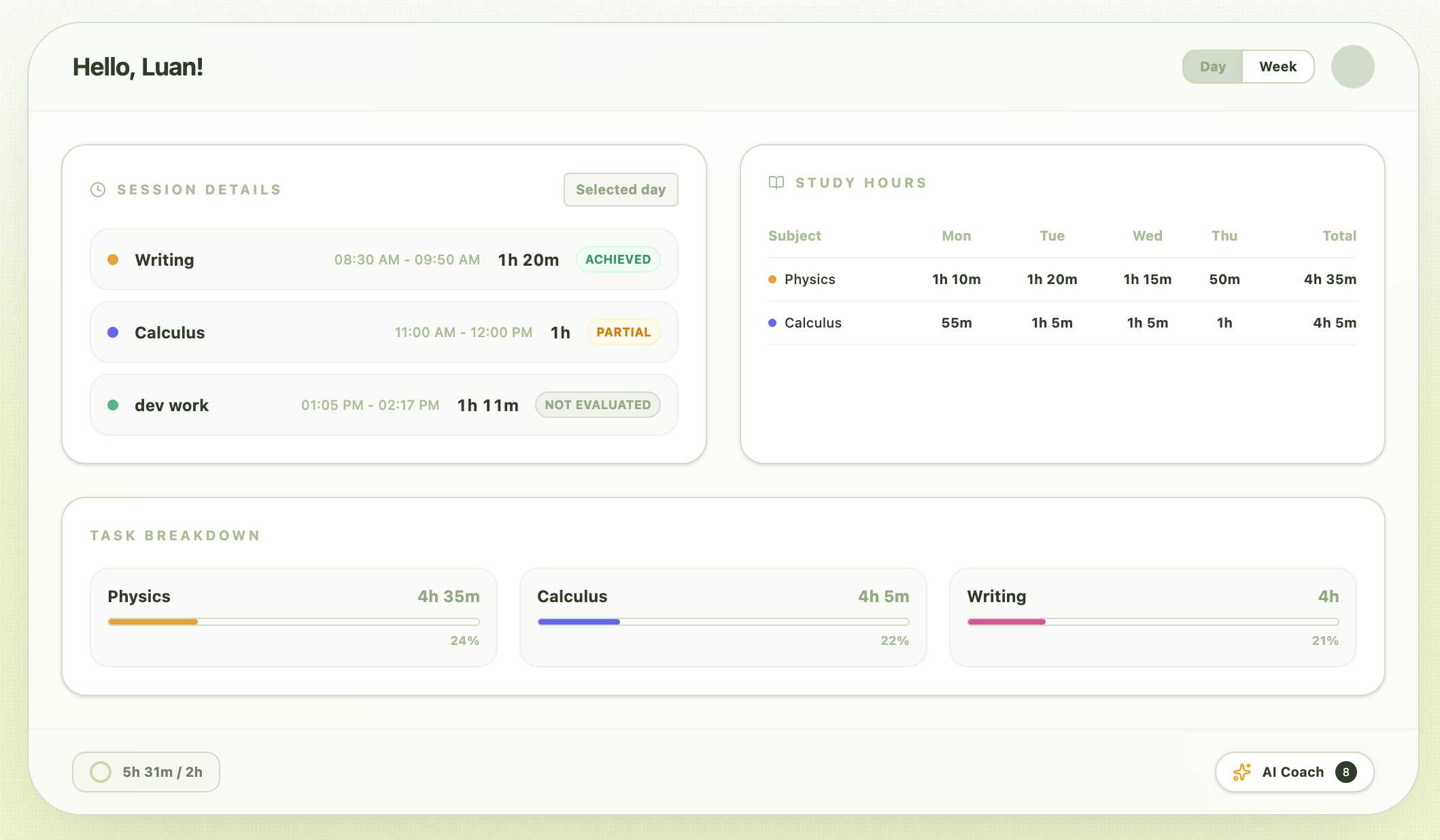
That record changed how I worked.
You can’t tell yourself you “spent the afternoon on the API” when the timesheet says 45 minutes. The document keeps you honest in a way that memory and intention never do.
School does something similar through deadlines. You have a midterm in three weeks. Someone emails you when you miss class. The accountability is external. It’s built into the environment.
Self-studying has neither. No record, no external structure, no running balance of what you owe. You rely entirely on memory and willpower to know how far behind you actually are. Most people underestimate the gap. The debt accumulates invisibly until it surfaces somewhere you can’t ignore, usually right before an exam.
Study debt is the metric that’s been missing
Every productivity tool I’ve used optimizes for a moment: the focus session, the planning block, the review card. None of them tell you how much you owe.
Study debt makes the gap concrete. It takes the fuzzy feeling of being behind and turns it into a number. You planned 5 hours. You completed 1 hour 11 minutes. Your debt is 3 hours 49 minutes. Your efficiency gap is 76%.
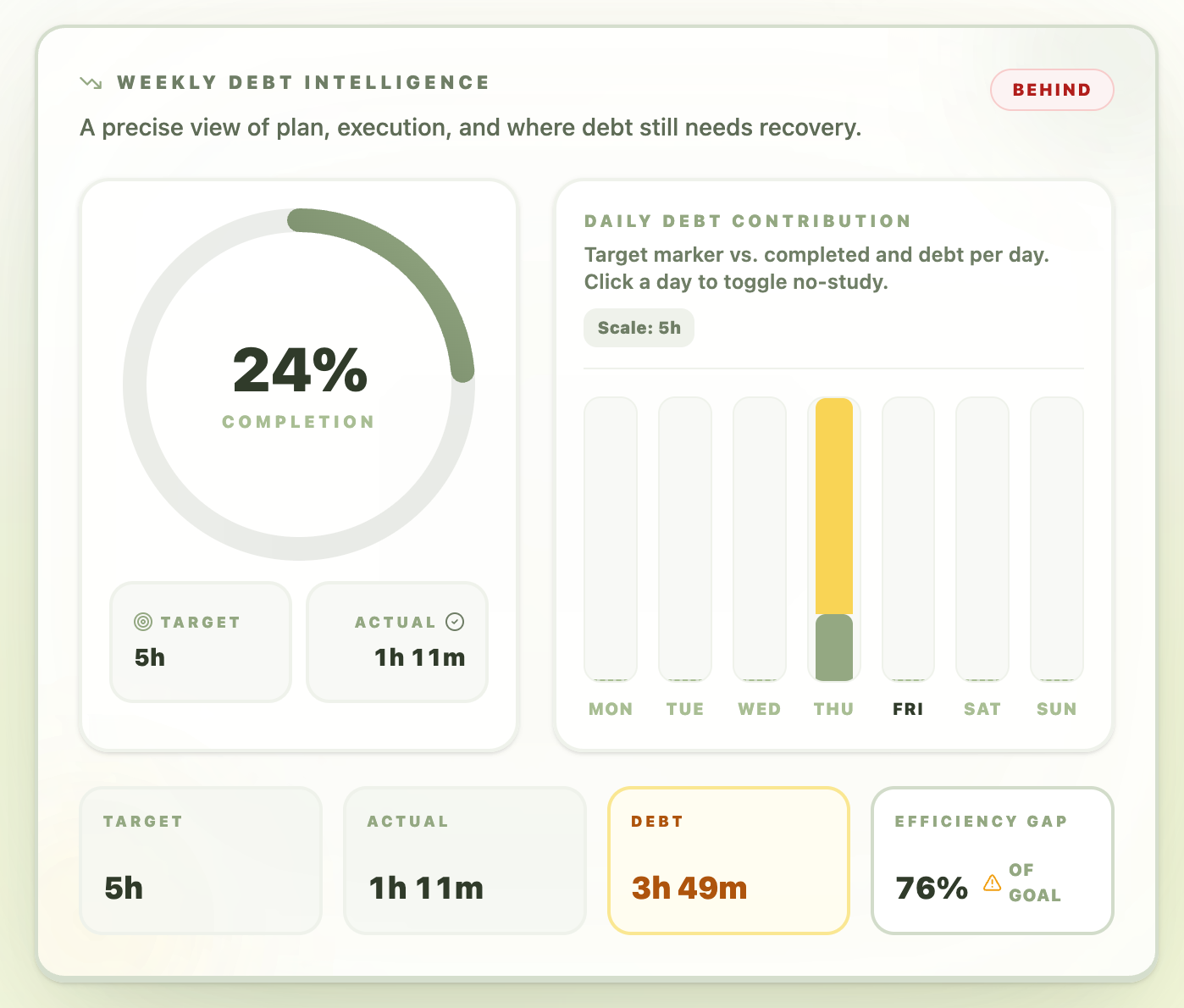
That’s not a judgment. It’s a balance sheet. And once the number exists, you can do something about it.
Study Sheet
I built Study Sheet to track study debt the way a timesheet tracks work hours.
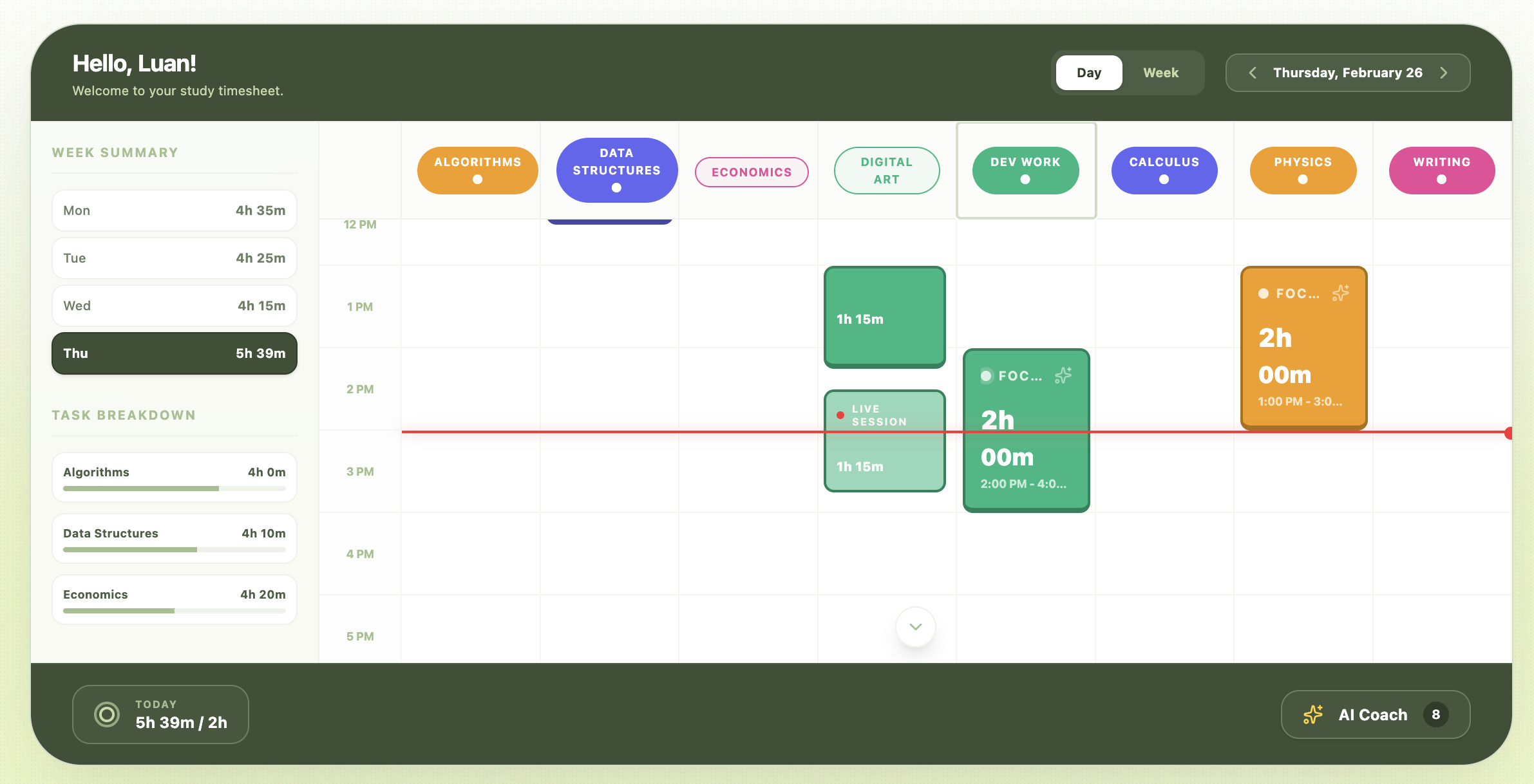
You set up subjects. Under each, you create tasks with a target time.
You clock in when you start, clock out when you stop. The app calculates your debt in real time: the delta between what you planned and what you completed. Unfinished tasks carry over. The debt doesn’t reset at midnight just because you feel like starting fresh.
At the end of the day, you have a daily view. At the end of the week, a weekly one. Both show the same thing: your target, your actual, and what you still owe yourself.
No streaks. No gamification. No generated plans.
Just an honest number. Turns out that’s the part that was missing.